

Designed by the architect/artist team of James Cutler and Maggie Smith, the Salem Witch Trials Memorial was made possible by a grant from the National Endowment for the Arts and has won national critical acclaim. It was dedicated on August 5, 1992, by Nobel Laureate Elie Wiesel.
The Memorial is designed to be a place of respect and reflection.
When you visit Salem, we invite you to visit the Memorial, where you will:
LEARN – About the 20 individuals who were put to death in 1692 because they were accused of witchcraft.
DISCOVER – The effects of ignorance, intolerance and a faulty justice system that led to 20 deaths and the imprisonment of many more.
EXPERIENCE – The Memorial as a quiet place of reflection and contemplation.
CONSIDER – How do the lessons of 1692 pertain to present-day events?
The Salem Witch Trials Memorial (SWTM) honors those who unjustly lost their lives in 1692. As such, the Memorial is a place of reverence and should be treated with respect and dignity. The Salem Award Foundation raised funds to have the Memorial renovated in 2012. In an effort to maintain these renovations, we are reaching out to everyone who visits the Memorial to help us keep it in the condition it deserves.
The community organization Voices Against Injustice, in conjunction with the City of Salem and the Peabody Essex Museum, maintains the Memorial for today’s visitors and future generations.
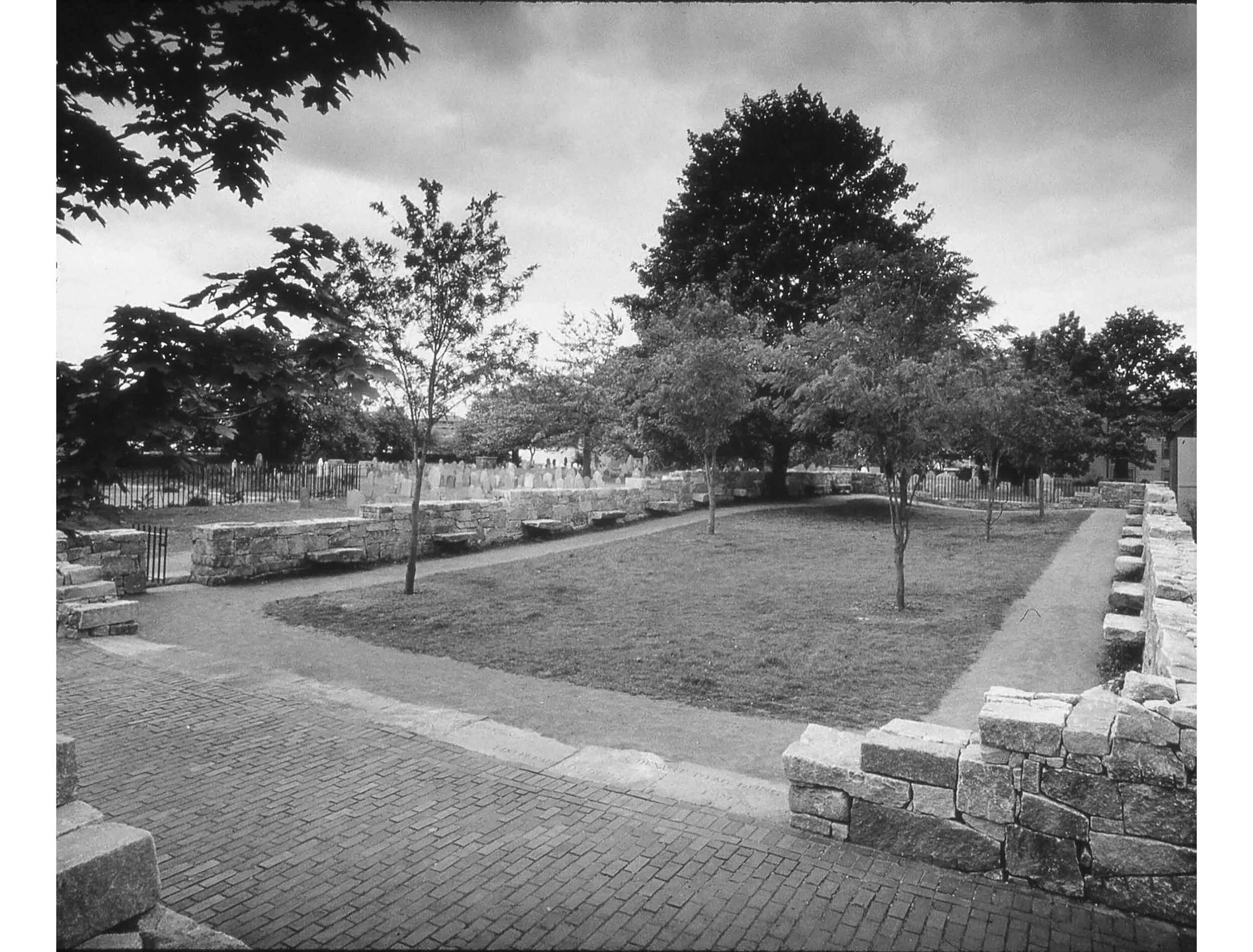
The Salem Witch Trials Memorial (SWTM) honors those who unjustly lost their lives in 1692. As such, the Memorial is a place of reverence and should be treated with respect and dignity. The Salem Award Foundation raised funds to have the Memorial renovated in 2012. In an effort to maintain these renovations, we are reaching out to everyone who visits the Memorial to help us keep it in the condition it deserves.
The community organization Voices Against Injustice, in conjunction with the City of Salem and the Peabody Essex Museum, maintains the Memorial for today’s visitors and future generations.
Guidelines for visiting
Appropriate Use
Please observe the following guidelines at the Salem
Witch Trials Memorial:
- Stay on the path;
- Maintain a respectful quiet for the space;
- Avoid walking on the grass;
Take a moment to consider the contemporary lessons of the witch trials. Feel free to sit quietly and contemplate on one of the granite benches;
Feel free to leave flowers on the stones as a remembrance to those honored here.
The following behavior is discouraged:
- Running, jumping, climbing, and standing on the benches and walls;
- Cellphone use in the Memorial;
- Playing amplified music in the Memorial;
- Eating in the Memorial;
- Smoking in the Memorial;
- Stepping over the white fence onto the grass;
- Leaving tokens that are not biodegradable, including plastic floral wrapping.
Tour Guides should not stand on the Memorial benches or walls, and should be mindful of their groups blocking the paths, limiting access to the Memorial by others. Candles and open flames are not permitted in the Memorial.